.tar — Tape Archive
A Unix archive format for bundling files, often paired with gzip, bzip2, or xz compression.
About this format
TAR bundles files and directories into one stream. Compression is usually added separately, which is why .tar.gz and .tar.xz are common.
Use TAR for source releases, server backups, and Unix-friendly archives. Use ZIP when recipients are mostly non-technical desktop users.
Real-world samples & file sizes
Four real compressed tar archives from package registries and official source releases. Each preview is generated from the actual archive file list, so the cover reflects the downloaded tarball contents.
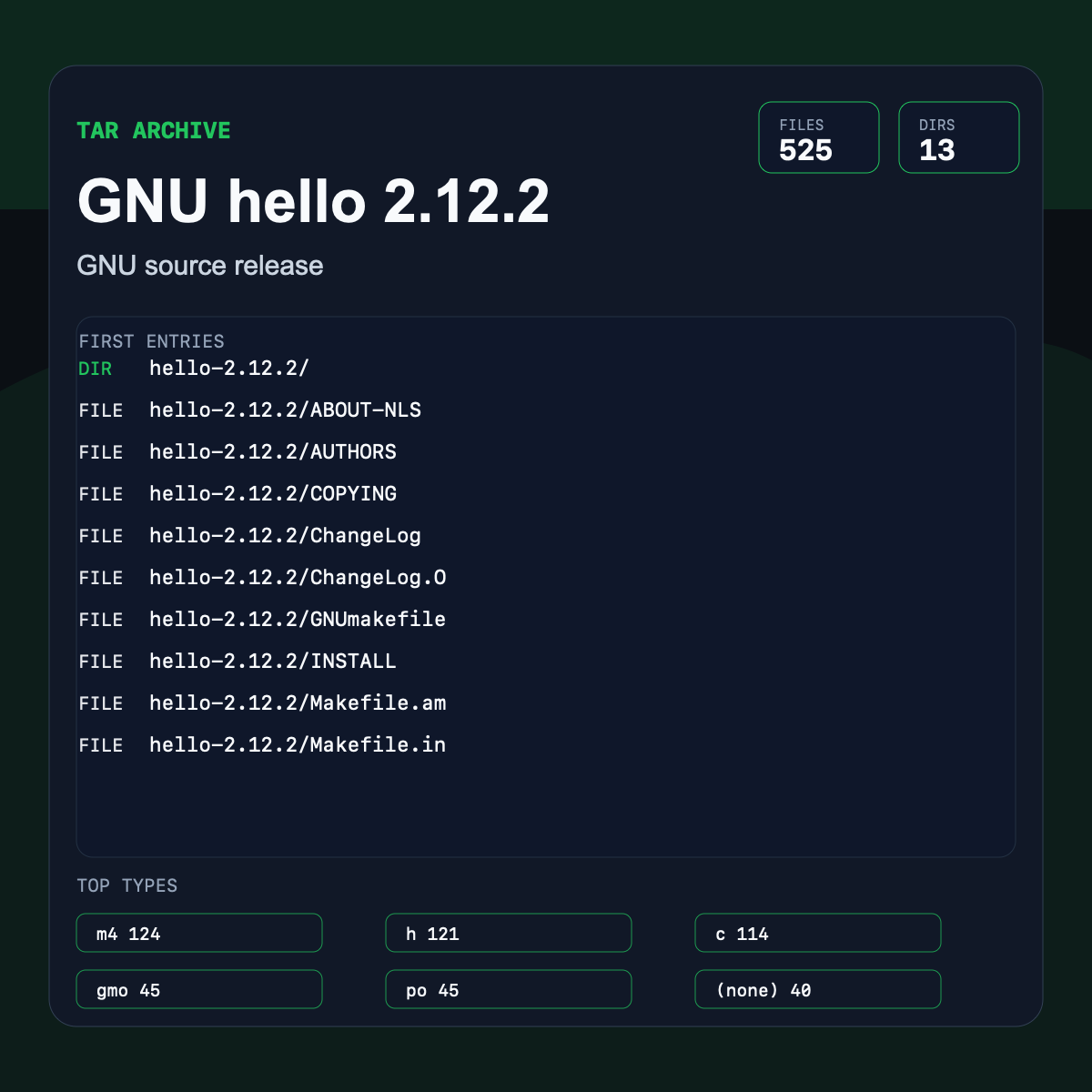
GNU hello Source TAR.GZ
A full GNU source release archive with build files, translations, and documentation.
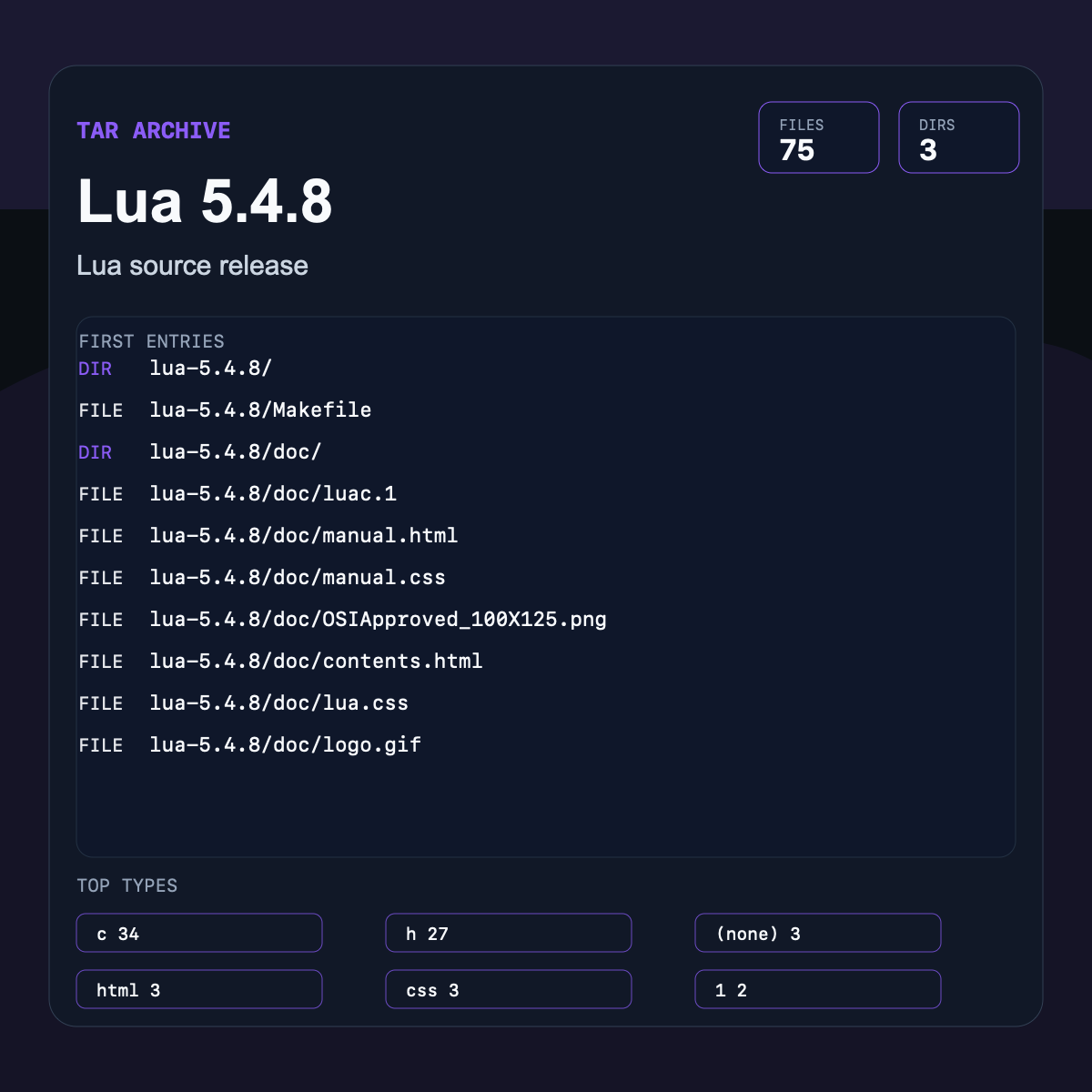
Lua 5.4.8 TAR.GZ
A compact language source archive with C sources, headers, manuals, and docs.
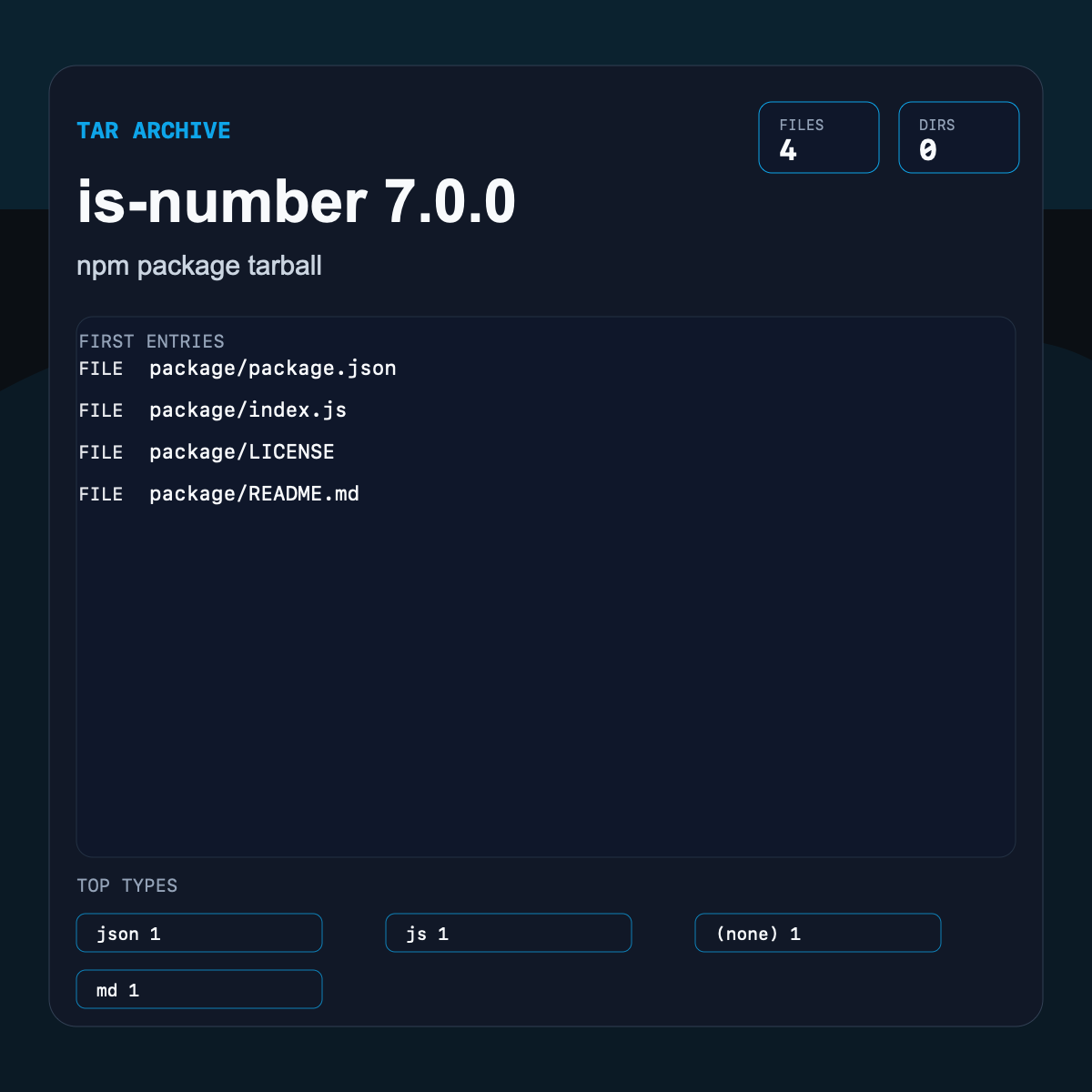
is-number NPM TGZ
A very small npm tarball useful for checking package-root paths and metadata.
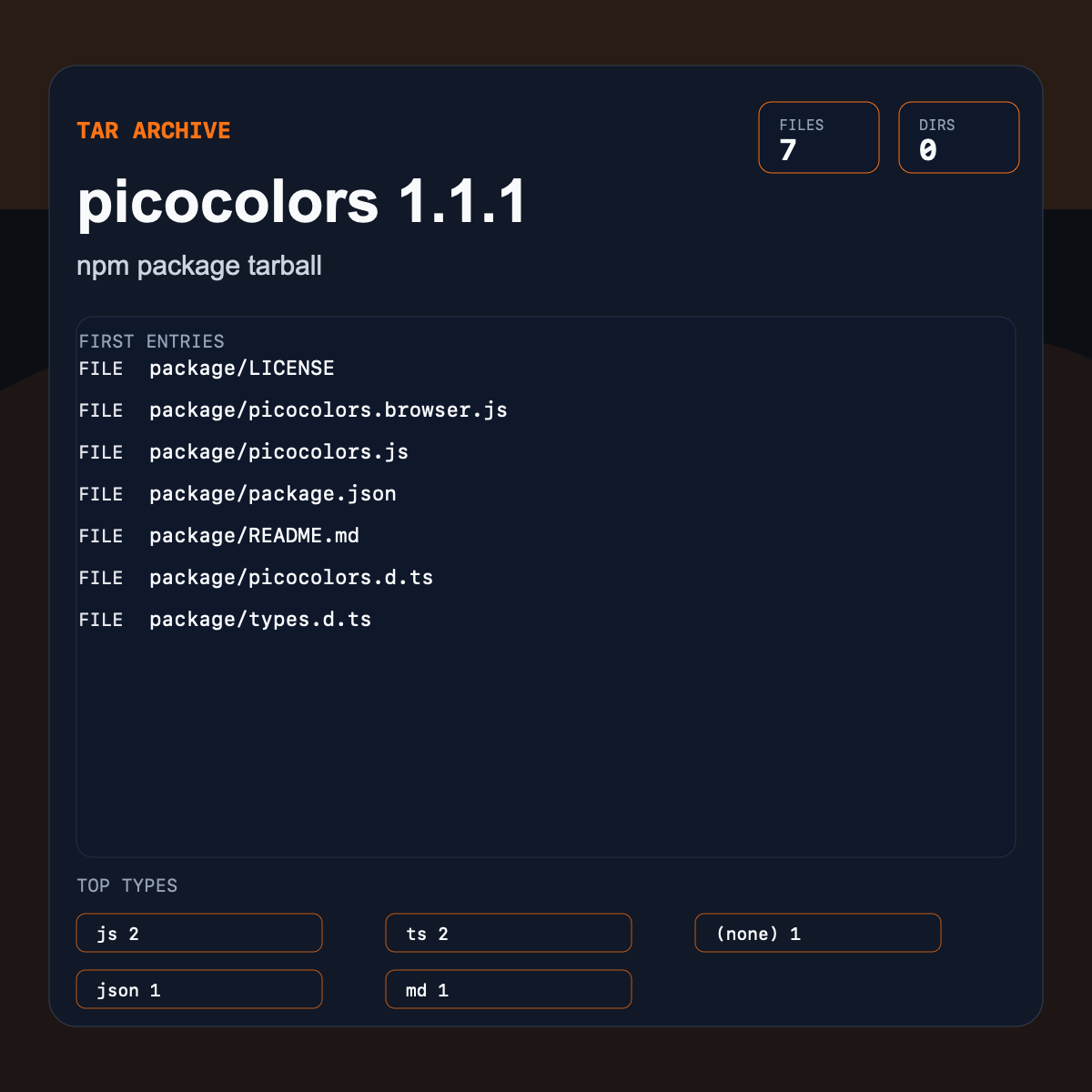
picocolors NPM TGZ
A small JavaScript package archive with browser, Node, and TypeScript definition files.
Pros
- +Preserves Unix paths and metadata
- +Excellent for source and server archives
- +Streams well
Cons
- −Plain .tar is not compressed
- −Less familiar to casual users than ZIP
- −Windows users may need tools for some variants
TAR vs other formats
| vs | Size | Quality | Note |
|---|---|---|---|
| ZIP | Depends on compression | Both archive files | ZIP is simpler for casual cross-platform sharing. |
| 7Z | 7Z often compresses smaller | Both preserve files | TAR is more Unix-native and stream-friendly. |
Where it works
- Unix/Linux native
- macOS native
- Windows 10/11 supports many archive operations
- Browsers download archives; extraction needs app logic
- tar
- bsdtar
- 7-Zip
- The Unarchiver
- WinRAR
Frequently asked questions
- Is TAR compressed?
- Plain .tar is only a bundle. Compression is added by gzip, bzip2, xz, or another compressor.
- Why use TAR for source code?
- It preserves Unix-style directory trees and streams well in build and server workflows.
Sources
- GNU tar manual - tar archive behavior and common usage
- Library of Congress - TAR - tar archive format family description